“Why does my house scream every time the welder turns on?” If this sounds all too familiar, you’re not alone. In Frankston and beyond, homes and workshops are demanding more power than ever – from ducted air-con and EV chargers to fancy home gyms with power-hungry machines. Enter 3 phase power.
In plain English, it’s like turning your single-lane country road of electricity into a three-lane highway. The result? A stronger, smoother, more reliable flow of power. This is exactly why many property owners consult a 3 phase power installation electrician when upgrading their electrical systems, especially when higher energy loads are involved.
Think of single-phase power as one pipe carrying water: it works fine for a trickle, but if you try to blast firehose volumes through it, things get sketchy (flickering lights, tripped breakers, etc.). Three-phase uses three “pipes” (three hot conductors), delivering a constant stream of energy without the pauses and dips of single-phase systems.
The payoff is huge: less flicker when your air-con kicks in, more muscle for big motors, and overall more efficient, stable electricity. It’s also the reason many businesses rely on industrial electrical services to install and maintain three-phase systems for heavy machinery and high-demand equipment.
The Big Benefits of 3 Phase Power
Upgrading to 3 phase isn’t just techy bragging rights – it brings concrete perks for busy Frankston homes and businesses. Many property owners consult a 3 phase power installation electrician when their electrical demand starts increasing or when they plan to run heavy equipment. Here are some of the biggest advantages of switching to a three-phase system:
Higher Power Capacity:
Three-phase lets you run beefier equipment. Each phase shares the load, so together you can handle much more kW without overtaxing the system. For example, powering a 15 kW load on single-phase might demand 125 A on one line (requiring a fat, expensive cable) – but on three-phase it only needs about 42 A per line using much thinner wiring. In short, more power on smaller wires.
Greater Efficiency:
Because the current is balanced across three lines, there’s less wasted energy. Three-phase systems naturally maintain near-unity power factor (i.e. they use energy more effectively), which means lower losses and leaner electricity bills over time. In fact, electricians note that the balanced 3-phase flow “minimize[s] voltage drops [and] improve[s] system efficiency” compared to single-phase.
Stable, Uninterrupted Delivery:
Three-phase never hits a “zero” point. Unlike single-phase (which dips between each wave cycle), one of the three lines in a 3-phase system is always near peak power. This continuity means no more sudden brown-outs when your big motor kicks on. Many experts, including a 3 phase power installation electrician, highlight that this setup provides a more stable and reliable power supply, reducing the risk of voltage fluctuations and flickering lights.
Better Equipment Performance:
Motors and heavy machinery love three-phase. The higher available voltage (up to 400 V line-to-line in Australia) lets motors run cooler and more efficiently. The net effect? Fewer breakdowns and more uptime for your fridge-freezer loads, machine tools or air compressors. Your gear lasts longer, and your productivity ticks up.
Cost Savings Over Time:
While a three-phase upgrade costs more upfront (more wires, bigger switchboard, etc.), the long-term savings are real. Cheaper energy bills and less maintenance can quickly justify the investment. Experts point out that for heavy-duty sites, “three phase power systems prove to be more cost-efficient in the long run” because of these lower running costs.
Future-Proofing:
When we talk modern, we talk EVs, solar, and smart homes. Many new technologies – think high-speed EV chargers, electric cooking, or whole-home battery storage – work best on 3-phase. Installing it now with the help of a qualified 3 phase power installation electrician means your Frankston property is ready for whatever comes next, whether it’s a second Tesla in the driveway or beefy home theatre AC systems.
At the end of the day, three-phase is the industrial-strength option for residential and commercial power. It’s why factories, data centers, and even large modern homes rely on it. As one electrician-blog sums it up: “a three phase setup doesn’t just provide more power; it provides smoother power. This consistency is crucial for the longevity and efficient operation of high-performance motors and sensitive equipment”.
Single-Phase vs Three-Phase at a Glance
A quick table helps illustrate the basics:
| Feature | Single-Phase Power | Three-Phase Power |
| Wiring | Two wires (1 active, 1 neutral) | Four wires (3 active, 1 neutral) |
| Voltage (Australia) | ~230 V (phase to neutral) | ~400 V (between any two phases) |
| Delivery | Pulsates (power dips each cycle) | Smooth, continuous flow (power never drops to zero) |
| Best For | Small homes, lighting, small appliances | Large homes, commercial workshops, EV chargers, factories |
This shows why three-phase is built for “heavier loads”. In practice, it means if you run that big ducted air‑con and an EV charger at the same time, your lights will stay steady instead of dimming or flickering. As one Aussie guide puts it, three-phase power is like “three pipes working together in perfect rhythm,” delivering a stronger, smoother, and more consistent stream of energy than a lone pipe.
Signs You Need a Three-Phase Upgrade
Not every house needs three-phase. But if you’re bumping up against these limits, it might be time:
- Flickering or Dim Lights:
If your lights dim or flicker when big appliances (like ducted AC or a pool pump) start up, that’s a classic tell-tale. It means your single-phase supply is straining under the load. - Frequent Tripping of Breakers:
Got breakers that trip whenever two big gadgets run at once? That overload means you might’ve outgrown single-phase. You’ll avoid these nuisance trips with balanced 3-phase circuits. - New High-Demand Gear:
Installing things like a heavy workshop setup (welders, lathes, compressors), a multi-kilowatt EV charger, or a whole-house ducted AC system? These are prime candidates for 3-phase power. For example, standard electric hot-water systems or high-amperage EV chargers can easily max out a single-phase supply; 3-phase can handle them smoothly. - Expanding Business or Workshop:
If you’re outfitting a garage, cafe or small factory in the Frankston/Mornington Peninsula area, 3-phase might already be the default. Commercial machines (elevators, bakery ovens, refrigeration) often require it. Local industrial electricians frequently list “3-phase installations and outlets” as a key service for warehouses and factories. - Planning for the Future:
Even if you’re OK now, think long-term. The more electric gadgets (and electric vehicles) we use, the more loads will surge. Going 3-phase today could be smarter than scrambling for it tomorrow.
By recognizing these signs, you avoid frustrations down the track. In the words of one savvy Aussie tradesperson, three-phase is about future-proofing your property. It means your home “can handle whatever you throw at it, both today and tomorrow”.
Working with an Electrician: Process & Safety
Upgrading to 3-phase power is not a weekend DIY project. Australian law mandates that only a qualified or licensed electrician can install or alter electrical power systems. This is important to ensure the work complies with national electrical safety regulations and wiring standards.
Thankfully, most licensed electricians in Frankston are well-versed in these requirements and understand the correct procedures for safe installation. They’ll guide you through the entire process and steer you through the steps below.
- Consult a Professional:
First, an electrician inspects your existing setup. They’ll check if your neighborhood has three-phase lines nearby and if your switchboard and meter can support the upgrade. - Check Availability with Distributor:
In Frankston, your local distributor (like United Energy) typically has 3-phase on nearby poles. But you’ll still submit a formal application. If approved, they’ll grant a connection offer – sometimes with an upgrade fee if your household demand exceeds 170 A. - Upgrade Meter and Switchboard:
The meter often needs replacing with a 3-phase compatible one. Your electrician will also fit a new switchboard or expand the old one to house the extra circuit breakers and RCDs (safety switches). In many cases, an “A-grade” or Level 2 electrician is required for these major works. - Rewire and Install Breakers:
New wiring is run from the main board to wherever it’s needed (workshop, kitchen, garage, etc.). Each of the three phases gets its own breaker. This stage is why you must hire a pro: incorrect wiring could be dangerous. - Testing and Compliance:
After installation, the electrician rigorously tests the system. Everything must meet AS/NZS 3000 wiring standards and state regulations. You’ll get an inspection certificate (often needed for insurance) certifying that your setup is safe and compliant. - Enjoy the Power:
Once signed off, your new 3-phase supply is up and running. You should immediately notice steadier power under heavy loads – no more voltage dips when multiple appliances run.
Throughout this, a good electrician handles the paperwork with the energy retailer and distributor, which can be a headache for laypeople. They also ensure you get the right safety gear: RCDs on every circuit (the law pretty much makes this mandatory now), properly sized breakers, and a solid earthing system. Safety isn’t optional; these precautions stop shocks and fires.
Think of hiring an electrician like hiring an engineer for your home’s power grid. They bring expertise and peace of mind.
As one industry blog notes, they’ll plan the layout so future expansion is easy, know the local grid quirks, and handle approvals – making the whole project “quicker, smoother, and compliant with standards”.
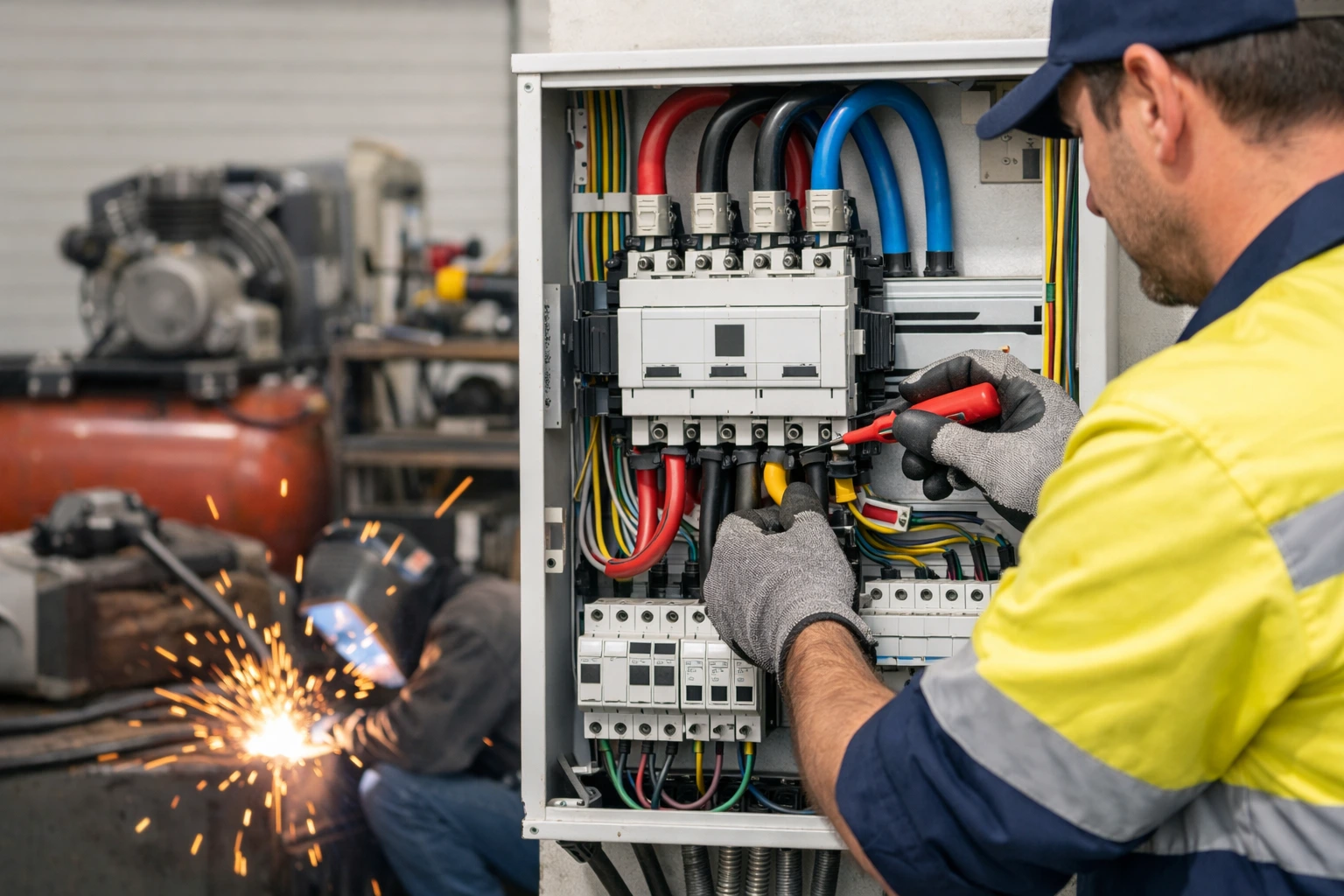
An electrician works on a switchboard during a three-phase upgrade. Proper wiring and safety devices are critical.
Industry connections: If you’re an industrial customer, you might deal with an industrial 3 phase electrician. These specialists focus on big commercial or factory sites, handling “industrial electrical services” like machine installations, switchboard upgrades, and large-scale maintenance.
Even homes with home gyms and workshops often call on these pros because they’re so used to heavy-duty 3-phase setups.
Conclusion: Powering Up Frankston’s Future
Upgrading to three-phase power is a bit like trading in a family sedan for a 4×4 SUV – it handles the bumps and extra load without breaking a sweat. For Frankston homeowners and businesses craving more power and stability, the benefits are clear: efficient performance, lower losses, and headroom for the tech of tomorrow.
The real key is getting the right electrician on the job. A qualified 3 phase power installation electrician will sort out local rules, complete the installation safely, and ensure everything is done according to Australian electrical standards. With the right expertise, your upgraded power supply will run smoothly in the background while you go about your day.
So, if you’ve ever cursed a tripped breaker or planned a big electrical upgrade, grab a cuppa and call a trusted 3 phase power installation electrician today. They’ll bring those wires together, balance the phases, and deliver the extra power you need – all safely and to code. Your lights (and tools, and machines) will thank you.
FAQs
- What is 3-phase power, really?
A: It’s an AC power system using three “live” wires (phases), each offset by 120°. Think of it as three separate power waves perfectly timed so there’s always energy available. This means no real power drop-outs (unlike single-phase’s cycles), giving you smooth, continuous power flow.
- How do I know if I need it?
A: You probably can soldier on with single-phase unless you’re installing things like fast EV chargers, big air conditioners or heavy workshop equipment. Telltale signs are flickering lights or frequent breaker trips when you crank on appliances. If you find yourself upgrading gear (or just dreaming bigger), it’s worth a chat with an electrician. - Is 3-phase power more expensive to run?
A: Actually, the cost of electricity (per kWh) doesn’t change with phases – a unit of power costs the same. But three-phase can lower your overall bills by running more efficiently under heavy loads. You will pay more upfront for installation and maybe a slightly higher meter fee, but many customers find the efficiency savings and increased capacity pay back over time. - What about safety and rules?
A: Australian regulations require licensed electricians for any 3-phase work. They’ll fit safety switches (RCDs) on all circuits, proper breakers for each phase, and ensure your earthing can handle it. It’s non-negotiable for safety and insurance purposes. - Who is an industrial 3-phase electrician?
A: It’s basically an electrician with extra chops for big jobs. They provide industrial electrical services – installing and maintaining large-scale electrical systems in factories, warehouses or large businesses. If your 3-phase needs involve heavy machinery or complex switchboards, you’ll want someone with that industrial expertise. - How do I start upgrading?
A: First, call a licensed electrician (ideally Level 2 accredited). They’ll survey your needs and coordinate with your electricity distributor. They’ll guide you through the process (upgrading meter/switchboard, rewiring, etc.) so you get a safe, reliable 3-phase feed.