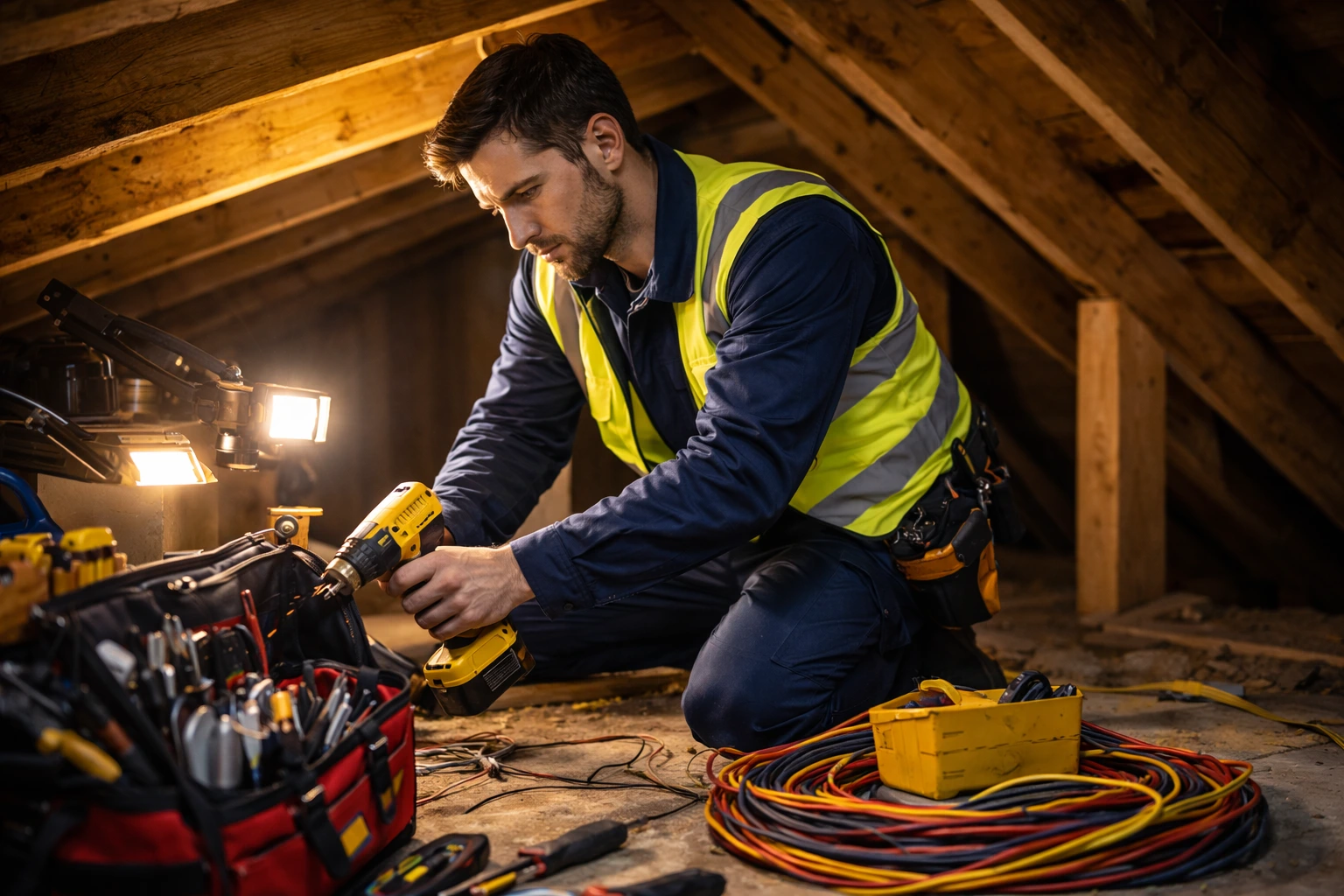
Picture this: it’s a stormy Frankston night, and the power just poof—gone. You’re in the dark, candles lit, swatting a mozzie, and flipping breakers like a mad scientist. Sounds familiar? Your home’s electrical system usually hums along quietly until something nasty (like a burning smell or a flicker-out) grabs your attention. In moments like that, you need to know when to pick up the phone and dial a 24 hour emergency electrician – someone who’ll rush over any time of day or night.
Life’s full of wild cards, and electricity is no exception. A spark here, a surge there… before you know it, what was a minor annoyance can turn into a full-blown fire hazard. When things get serious, you don’t want to be tinkering with DIY fixes – you want a qualified sparkie who knows how to handle emergency electrical repairs safely.
We’ll walk you through the red flags to watch for (smoking outlets, freaky flickering, the whole lot) and show you when searching for an “electrician near me” means it’s time to call in the pros. In fact, in Frankston, one trusted name offering true round-the-clock help is [DMACK Electrix Group] – our local 24/7 emergency electricians.
Electricity is invisible until it misbehaves. When it does, it can feel a bit like a dark magic trick gone wrong. That’s when your instinct is right: call a 24 hour emergency electrician immediately.
Red Flags: Signs It’s Time to Call
Not all electrical glitches are created equal. A tripped fuse because your kids turned on the heater and the toaster at the same time? Annoying, but not necessarily urgent. But some symptoms are big flashing sirens screaming for help. Keep an eye (and nose!) out for these:
- Burning smells or smoke. If something in your home smells like burning plastic, rubber, or insulation, drop everything. This often means wires or outlets are overheating. According to safety experts, any strange electrical odor (like melting plastic or a sharp, fishy scent) is a “clear warning sign of a fire waiting to happen.”. When in doubt, switch off the power and call an electrician before the issue sparks into a blaze.
- Sparks or fire. Seeing sparks shoot out of an outlet, switch, or appliance is a no-brainer emergency. It could mean live wires are exposed or arcing. One small spark every now and then might be normal, but repeated arcing or even a small flame is serious. Don’t touch it – call for help right away.
- Frequent breaker trips. Circuit breakers are your home’s built-in safety guards, so an occasional trip (especially if you’re running a lot of devices) is expected. But if breakers trip all the time for no obvious reason, it’s a red flag.
This typically signals overloaded circuits or faulty wiring, which can overheat. Rather than keep resetting switches, call an emergency electrician to diagnose the problem – ignoring it could literally be a fire waiting to happen.
- Lights flickering or dimming randomly. Flickering lights can be more than just annoying – they often point to wiring issues or loose connections. If every time the kettle boils your ceiling light does a disco flicker, it suggests voltage drops or loose wires.
Over time, loose connections heat up, leading to bigger hazards. This kind of partial outage (some lights off, some on) or sudden dimming definitely calls for a pro.
- Warm, discoloured or buzzing power points. Check your powerpoints and switches: if they’re hot to the touch, cracked, melted, or buzzing, stop what you’re doing. These are classic signs of internal damage or overload.
The Reader’s Digest warns that a warm or discoloured socket could be overheating and “actually a fire hazard”. It’s not something to ignore or duct-tape over – call the emergency electrician immediately.
- Total power outage (household only). If your neighbours’ lights are on but yours are out, that’s a big clue. Power cut for the whole street? That’s usually the grid’s problem. But if just your home or specific rooms go dark (and a quick reset doesn’t hold), don’t fiddle with the box – call an electrician. It could be an internal fault (blown fuse, short circuit) that you need a pro to fix.
- Water exposure or flooding. Water and electricity are a terrifying combo. After any flooding, leaks or even heavy rain infiltration, do not touch any switches or circuits. Shut off power if you can and get out safely.
ElectricalAtoZ points out that if your home floods, the very first call (after emergency services) should be to an electrician. They’ll isolate and inspect the system – re-energising it without checks is extremely dangerous.
- Electric shock or tingling sensation. Even a small zap when you touch an appliance or outlet is abnormal and dangerous. This hints at faulty grounding or live wires where they shouldn’t be. It can escalate to a life-threatening shock, so treat it like an emergency. Turn off that device and call an electrician right now.
- Strange sounds (buzzing, crackling). Any odd noise from outlets, panels or switches means your wiring is unhappy. A faint buzz or pop is your house screaming for attention. It often means loose or overloaded wiring. Because those sounds indicate heat build-up, ignore them at your peril – get a professional ASAP.
In short, any sign of burning (smell, smoke, heat), sparking, shock, or persistent faults should send you calling an emergency sparkie. As Mister Sparky explains, small issues can quickly escalate: “problems that start small often escalate without much warning”.
What Does a 24/7 Electrician Do?
So you’ve called the 24 hour emergency electrician – what happens next? They’ll respond promptly (sometimes within the hour) and safely troubleshoot the issue. Unlike a routine service call, an emergency electrician carries the tools and know-how to stabilise dangerous situations on the fly. That means:
- Immediate Safety Checks: They’ll first isolate power in affected areas to keep everyone safe. This might include shutting off breakers or power main to stop sparks or fires, following official electrical safety advice.
- Rapid Diagnosis: Using specialised testers, they’ll pinpoint the fault – whether it’s a shorted wire, faulty appliance, water damage, or something else. For example, if your panel overheated, they’ll inspect each circuit and wire to find the hot spot.
- Emergency Repairs: They may perform temporary fixes to get power back safely (like replacing a blown fuse or wiring a bypass). But their goal is lasting safety. If you had burnt outlets or charred wires, they’ll replace those components with new, code-compliant parts.
- Restoring Power: Once it’s safe, they’ll turn power back on and monitor for any new issues. The difference between a random repairperson and a 24/7 emergency electrician is that the latter knows the stakes. They’re prepared to work under pressure – stormy nights, weekend late shifts, you name it.
In other words, emergency electricians do more than just turn up with a smile; they act fast, protect your home, and ensure nothing dangerous is lurking behind the walls. If you’re thinking, “Maybe I can just wait until morning,” keep in mind: electricity doesn’t clock off at 5 pm.
A seemingly small fault, like a half-burnt wire, can ignite a fire overnight. As Mister Sparky puts it, acting quickly on electrical issues “can prevent damage, avoid injuries, and stop a minor issue from turning into a major repair”.
DIY vs. Call the Pros
You might be thinking, “It sounds expensive, so maybe I can just fix it myself?” Resist that urge! Household electrical systems are complex and unforgiving. A stray wire or a loose switch can be a life-altering mistake. Consider these do-it-yourself pitfalls:
- Temporary fixes make hidden dangers: Slapping electrical tape over a frayed cord or bootlegging a wire shortcut is asking for trouble. These band-aid solutions often hide the real problem. A qualified electrician will find the root cause instead of letting it sneak back on you later.
- Safety codes and training: Professionals know the latest Australian electrical codes. They have training and gear (like insulated tools and voltage detectors) that DIYers don’t. In Australia, only licensed electricians are supposed to do major electrical work. Being friendly and eager doesn’t replace experience.
- High stakes: Remember, water and electricity? Spark and flammable? It only takes one mistake. The Reader’s Digest reminds us “you should never attempt to fix an electrical issue yourself”. The safest play is to avoid DIY and call an expert who works on these issues every day.
Trusting a 24 hour emergency electrician might cost more up front, but it could save your house (and life) in the long run. If you’re still doubtful, imagine the cost of a house fire or a hospital bill – not worth the risk, right?
How to Find Help Fast in Frankston
Let’s say you’ve spotted the telltale signs: flickering lights, outlet sparks, or worse. What next? First, always ensure safety: turn off any suspicious circuit, unplug appliances, and keep clear. Then, pick up your phone and Google “electrician near me” (or better yet, remember a trusted local contact).
In Frankston and nearby suburbs, DMACK Electrix Group is one company that advertises “24/7 Emergency Service Available”. You could link directly to them, but also check reviews and licences. An emergency electrician should answer 24/7, arrive quickly, and not charge an astronomical middle-of-the-night premium. Many reputable companies list fixed emergency fees so you know what to expect.
Whether it’s a weekend or a holiday, calling an emergency electrician is usually the correct move if you’ve identified any severe symptoms. The alternative – Googling “electrician near me” frantically at 2 AM and crossing your fingers – is far less reliable.
Frankston locals often rely on word-of-mouth or local directories in panic moments. That’s where bookmarks pay off. If you live on the Peninsula, keep that emergency number handy now; you don’t want to be scrambling later.
Conclusion
In the end, electrical emergencies are not a time for hope – they’re a time for action. If your home sends any warning signal (buzzing breakers, fried outlets, anything burning), treat it like a red alert. Shut off power if needed, and immediately call a 24 hour emergency electrician. Early action could mean the difference between a quick fix and a costly catastrophe.
Frankston’s storms and busy household life can throw curveballs, but you don’t have to face them alone. A trusted emergency electrician (like DMACK Electrix Group) will ensure you’re not left in the dark—literally or figuratively. Remember: staying safe is EVERYONE’S job. When in doubt, err on the side of caution and let the pros handle the live wires.
Stay prepared, stay safe, and keep that electrician on speed dial.
Frequently Asked Questions
Q: What exactly counts as an electrical emergency?
A: Generally, anything that endangers people or property immediately is an emergency. This includes smoke or sparks from outlets, sudden power loss in one area of the house, exposed live wires, or any burning smell. Flood or leak involving electrics is also urgent. If you’re unsure whether it’s an emergency, it’s safest to call a 24-hour electrician for advice.
Q: Should I turn off the circuit breaker when an emergency happens?
A: Yes, if you can do so safely, shut off power at the breaker to prevent further damage or fire. But only if you’re not at risk (for example, don’t attempt it if water is near the box). If there’s immediate danger (like visible fire), get yourself and others out and call emergency services before calling an electrician.
Q: I smelled something burning in my wall last night, but it went away. Is it still serious?
A: Absolutely. Burning smells can indicate overheating wires or outlets that could catch fire at any time. Don’t wait for it to happen. Schedule an emergency electrician ASAP to inspect and repair the issue.
Q: How much do emergency call-outs cost at night?
A: Rates vary, but most electricians charge more after-hours than daytime. However, reputable local electricians often have set emergency fees. It’s best to ask for an estimate before they arrive. Remember: paying for professional help is far cheaper than repair bills after a disaster.
Q: What can I do until the electrician arrives?
A: Stay safe: turn off power to the problem area if possible, unplug any affected appliances, and keep family members (especially kids and pets) away. Do not try to fix wiring yourself. Make sure you have clear access to the affected area so the electrician can start work right away.